안견풍 금강산도 - 구조의 고증과 조건의 회화
An Gyeon–Style Geumgangsan Landscape - Structural Verification under Conditions
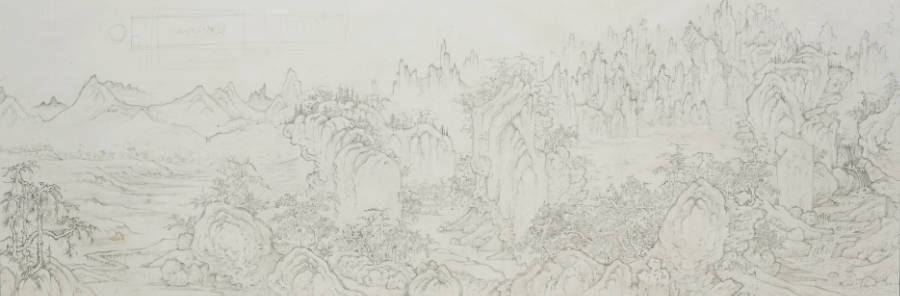
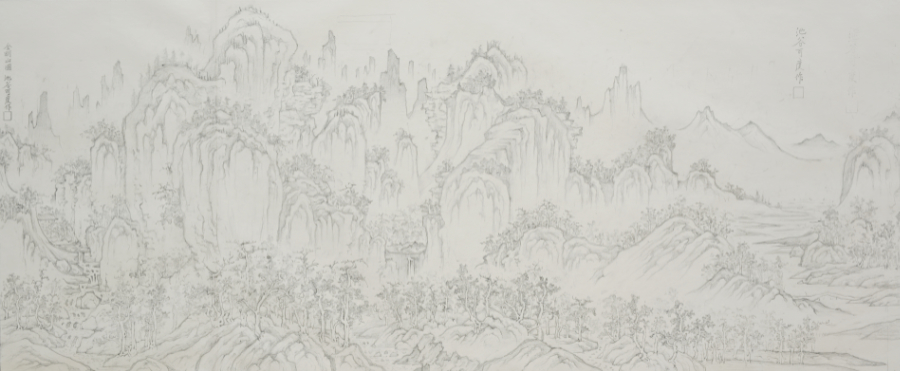
장병언 jang byeong eun 張炳彥 / 안견풍 금강산도 — 진작 설정을 위한 밑그림 Preparatory Drawing for An Gyeon-Style Geumgangsan Landscape, Authentic Version / Pencil on paper / 50.0 × 149.7 cm / 2015
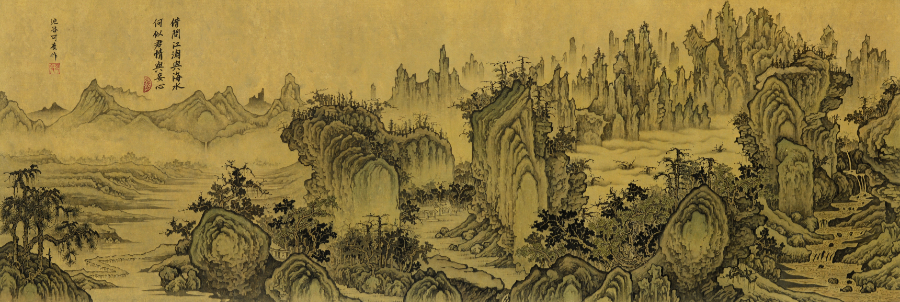
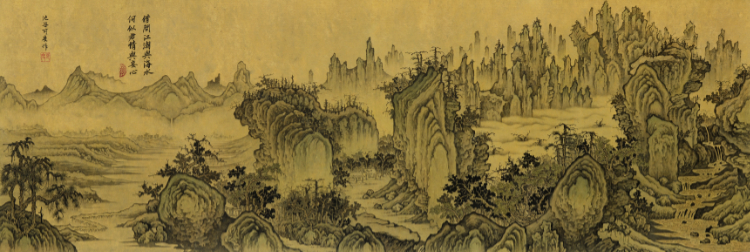
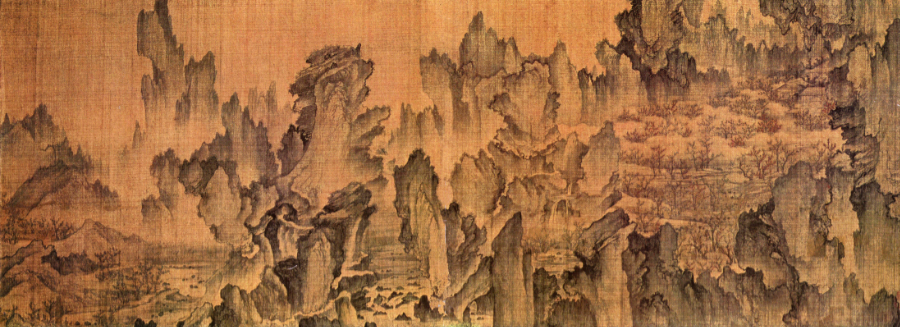
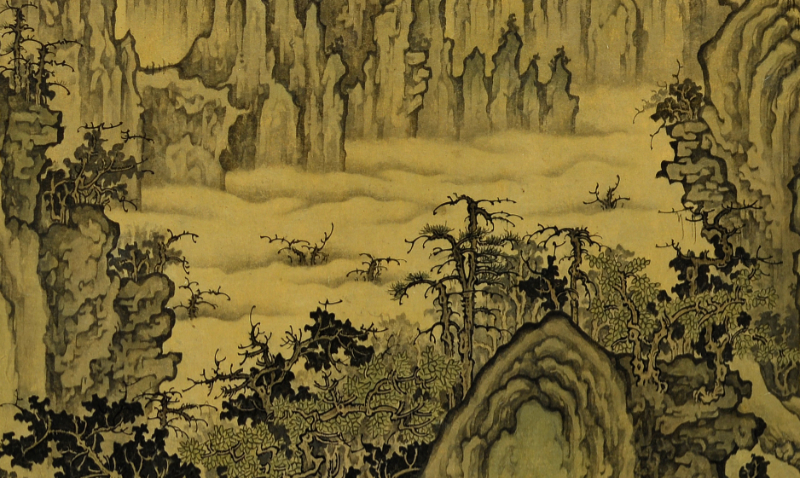
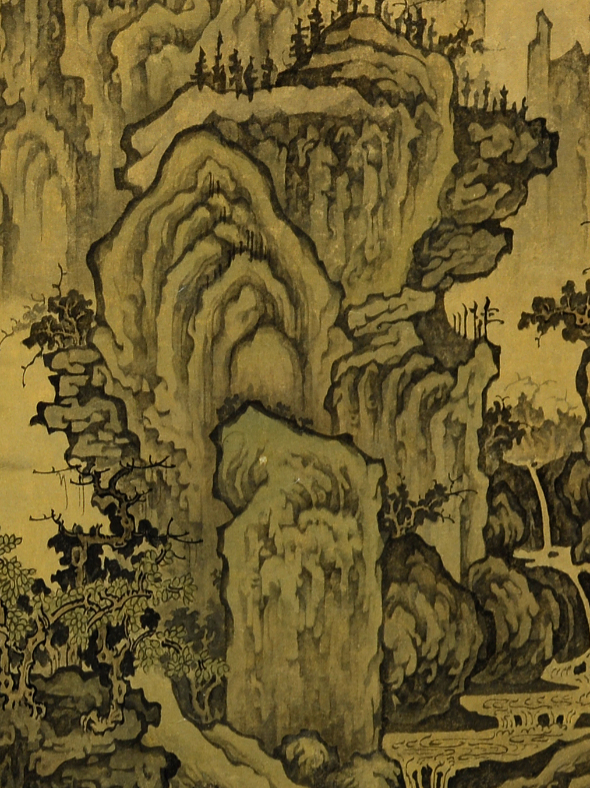
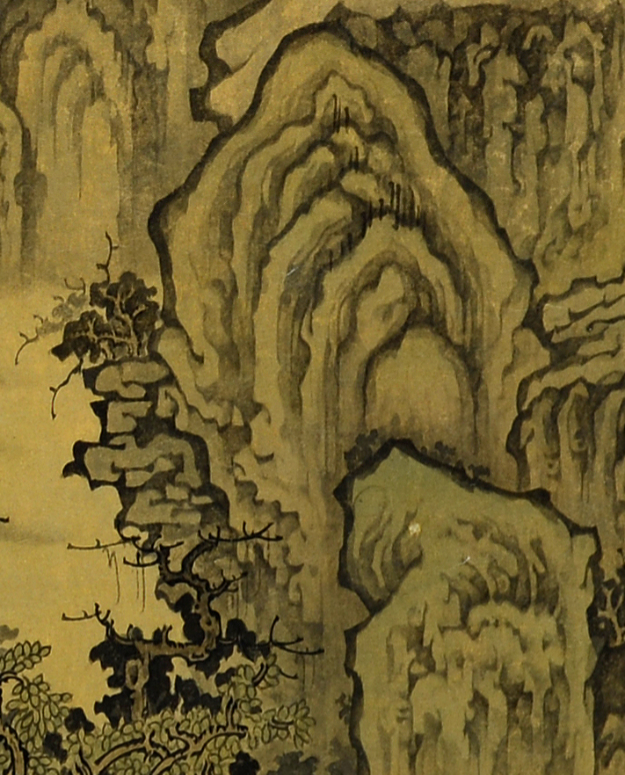
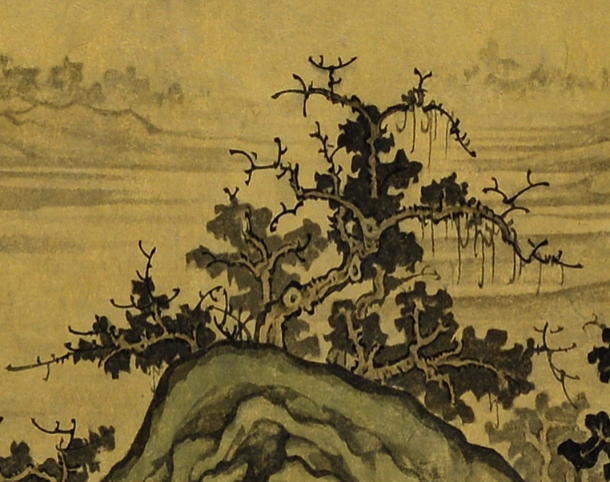
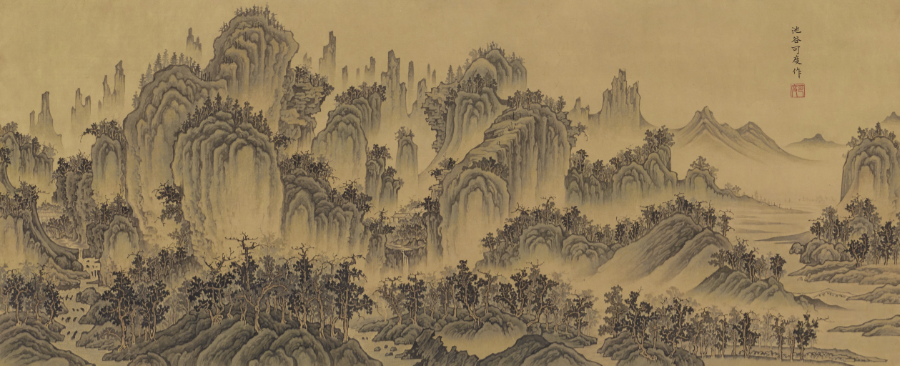
장병언 jang byeong eun 張炳彥 / 안견풍 금강산도 — 진작 설정 An Gyeon-Style Geumgangsan Landscape — Authentic Version / Ink and light color on paper / 50.0 × 149.7 cm / 2015
안견풍 금강산도 — 구조의 고증과 조건의 회화
Chapter 8은 두 점의 회화를 중심으로 구성된다.
이 두 점의 〈안견풍금강산도〉는
2015년 SBS 드라마 사임당, 빛의 일기에
실제 소품 회화로 제작·사용된 작품이다.
극 중에서 이 그림들은
‘안견이 그렸다고 전해지는 금강산도’로 설정되며,
조선시대의 사임당과 현대의 인물 서지윤을 연결하는
이야기의 출발점으로 기능한다.
그러나 역사적으로
안견이 금강산을 그렸다는 기록은 없으며,
현존 진작 역시 몽유도원도 한 점뿐이다.
이 작업은
존재하지 않는 회화를 실존하는 것처럼 구축해야 하는
조건에서 출발했다.
-고증이라는 문제-
이 공백을 메우기 위해
작업은 안견의 회화를 모사하는 방식을 택하지 않았다.
대신 그가 사용한 구조적 언어를 추적하며,
안견과 그를 둘러싼 참조들 사이에서
그가 그렸을 법한 패턴의 교집합을 찾으려 했다.
이는
21세기를 사는 사람이
15세기의 언어로
그 시대가 공감할 수 있는 시를 짓는 작업에 가까웠다.
-조건, 욕망, 책임-
작업이 진행되던 당시
드라마는 한·중·일 동시 방영을 목표로 기획되었고,
그 결과물이 대중 매체의 중심에 놓인다는 조건은
작업 내내 쉽게 벗어날 수 없는 압박으로 작용했다.
이 두 점의 〈안견풍금강산도〉에는
명성을 향한 욕망 역시 분명히 개입되어 있다.
그러나 그 욕망은
쉽게 주목을 얻기 위한 선택으로 향하지 않았고,
회화의 밀도와 고증을 끝까지 유지해야 할
조건으로 작동했다.
이 그림은
드라마의 배경이 아니라
이야기가 시작되는 기점으로 설정된 회화였다.
그 위치는
작가 개인의 욕망과 책임을
한 화면 안으로 동시에 끌어들이는 조건이 되었다.
An Gyeon-Style Geumgangsan Landscape — Structural Verification and Painting under Conditions
Chapter 8 is structured around two paintings.
These two works, An Gyeon-Style Geumgangsan Landscape,
were produced and used as actual prop paintings
for the 2015 SBS television drama Saimdang, Light’s Diary.
Within the narrative, these paintings are presented as
“Geumgangsan Landscapes said to have been painted by An Gyeon,”
functioning as the point of departure for the story,
linking the Joseon-period figure Saimdang
with the contemporary character Seo Ji-yoon.
Historically, however,
there is no record of An Gyeon having painted Mount Geumgang,
and his only extant authentic work is Dream Journey to the Peach Blossom Land.
This project therefore began under the condition
of having to construct a non-existent painting
as if it were real.
-The Question of Verification-
To address this absence,
the work did not adopt a strategy of imitation.
Rather than copying An Gyeon’s paintings,
it sought to trace the structural language he employed,
searching for an intersection of patterns
that An Gyeon might plausibly have painted
between his works and the surrounding references.
This process was akin to
a person living in the twenty-first century
attempting to compose a poem in the language of the fifteenth century,
one that could still resonate with its time.
-Conditions, Desire, and Responsibility-
At the time this work was undertaken,
the drama was planned for simultaneous broadcast
in Korea, China, and Japan,
and the condition that the paintings would be placed
at the center of a mass-media narrative
exerted an inescapable pressure throughout the process.
Within these two works,
the desire for recognition is also unmistakably present.
Yet this desire did not lead toward choices
aimed at gaining easy attention;
instead, it functioned as a condition
that demanded the maintenance of pictorial density
and structural verification to the very end.
These paintings were not conceived
as background imagery for a drama,
but as the point at which the narrative begins.
That position became the condition
through which personal desire and responsibility
were simultaneously drawn into a single pictorial field.
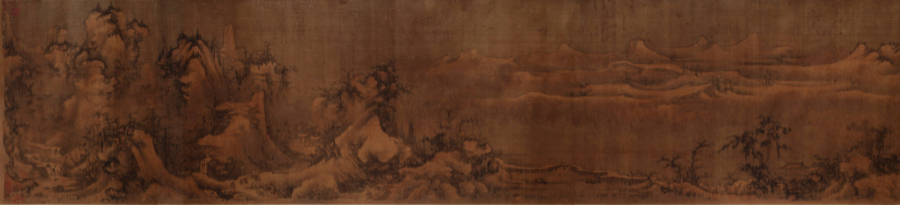
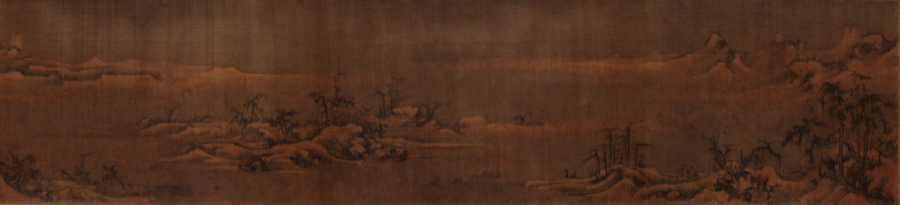
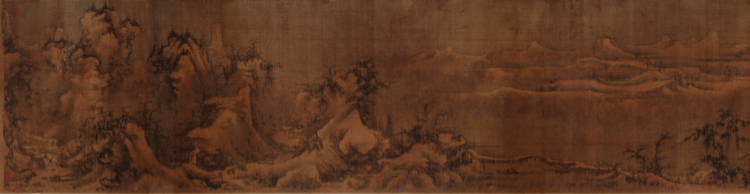
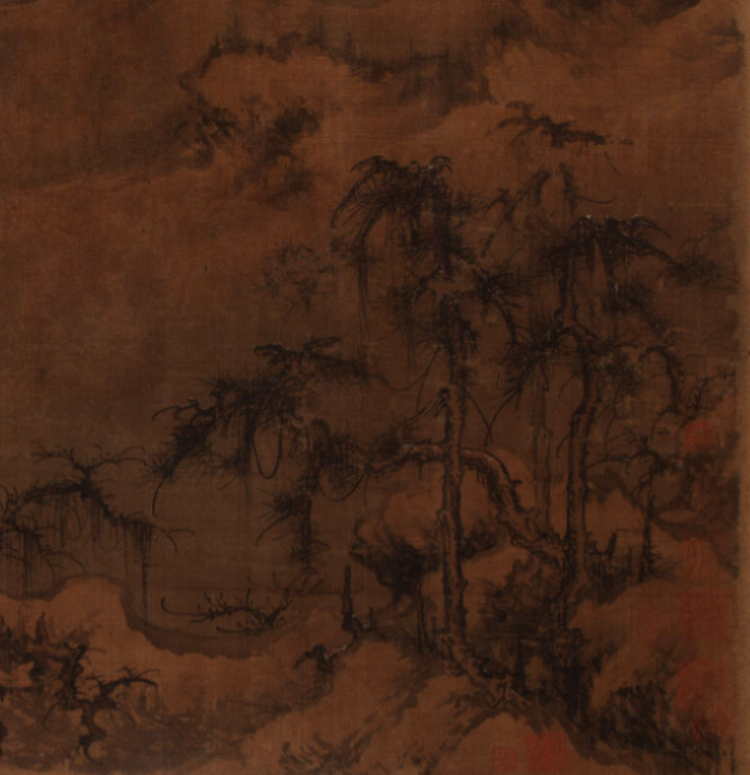
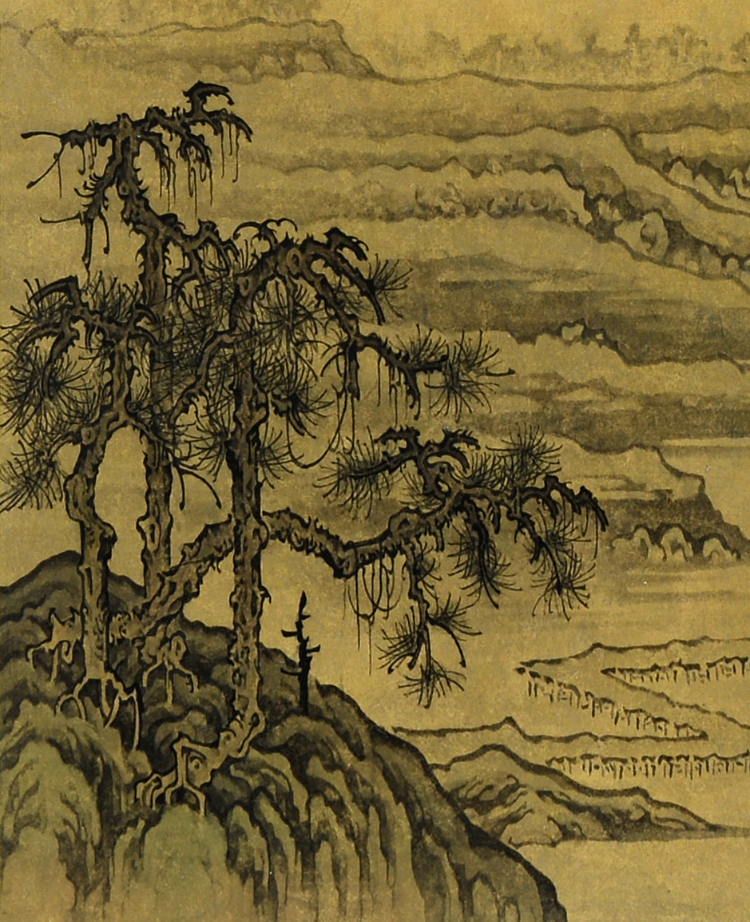
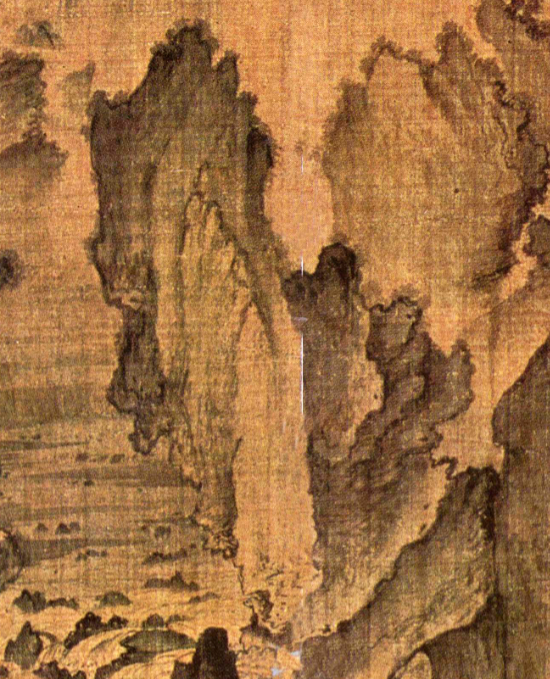
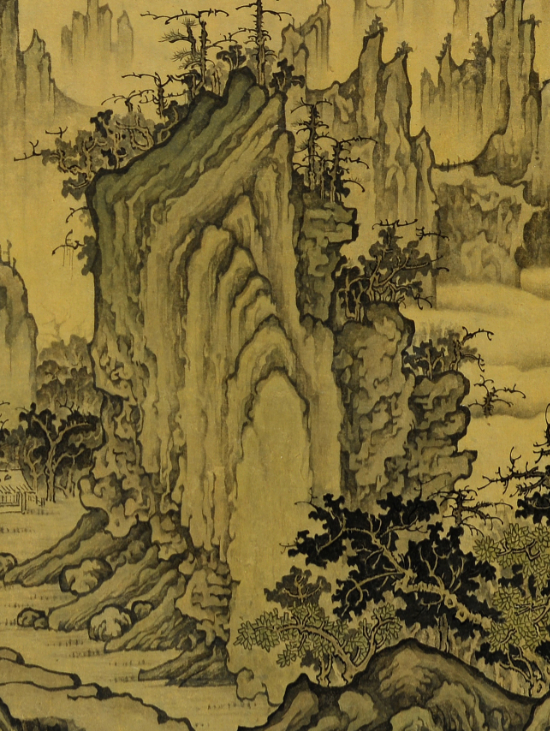
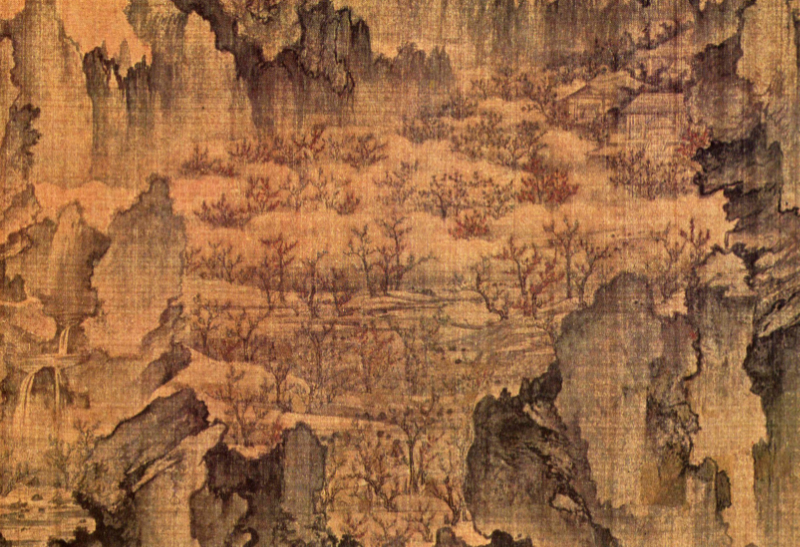
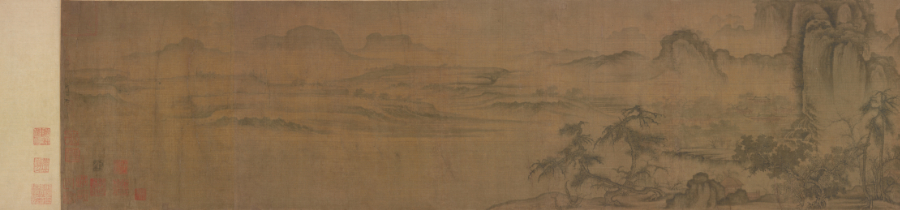
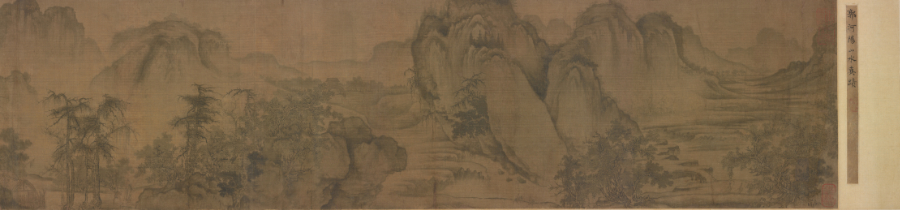
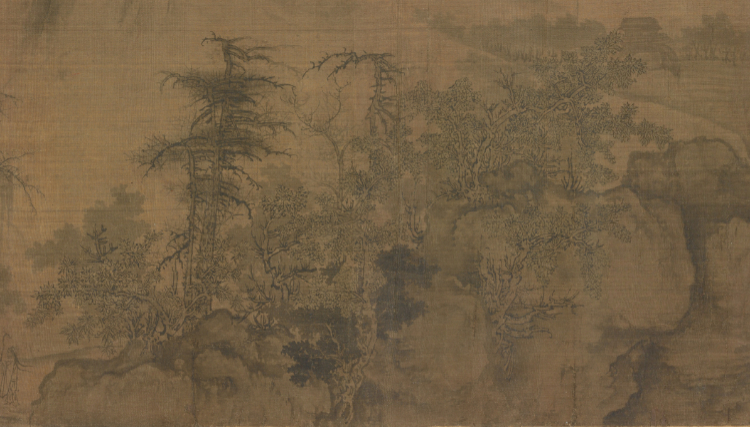
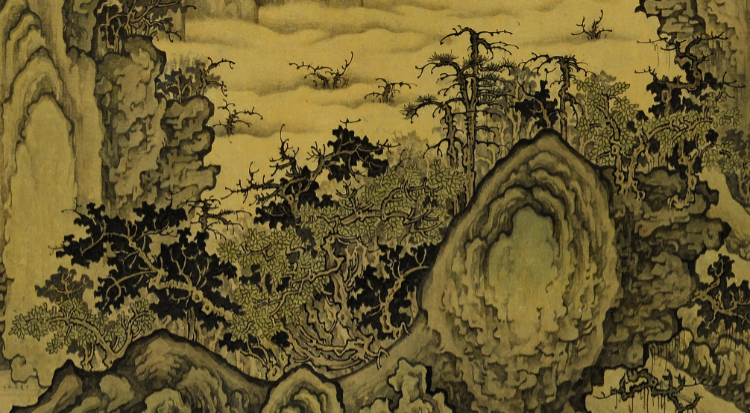
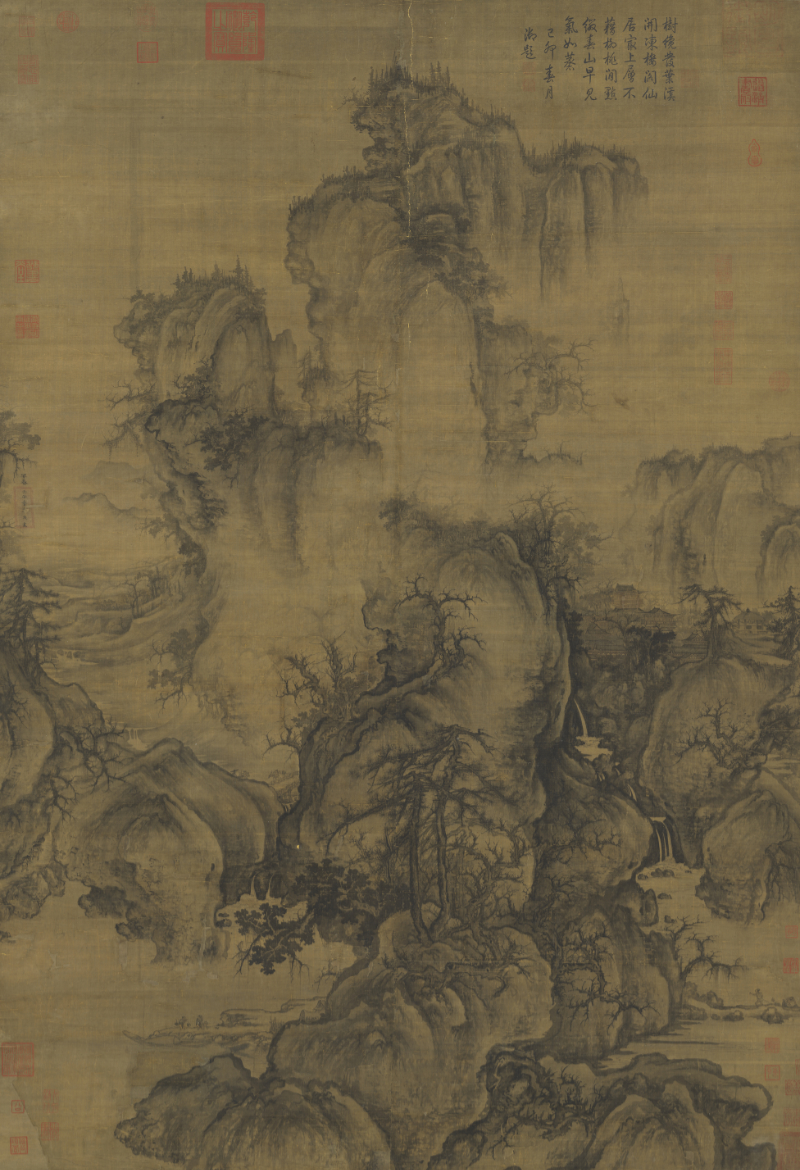
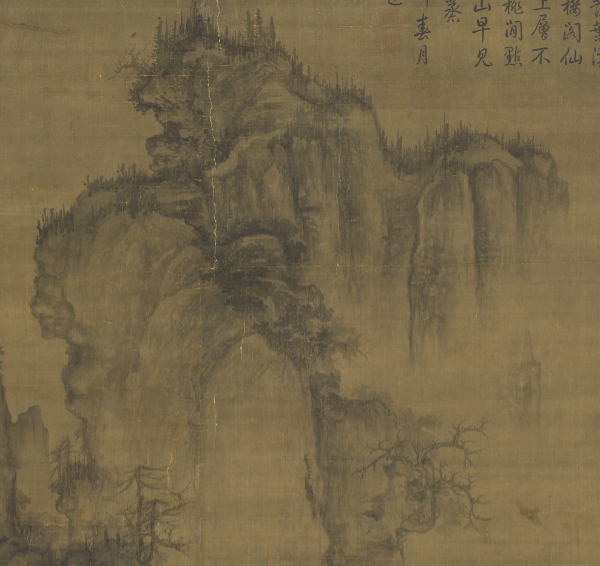
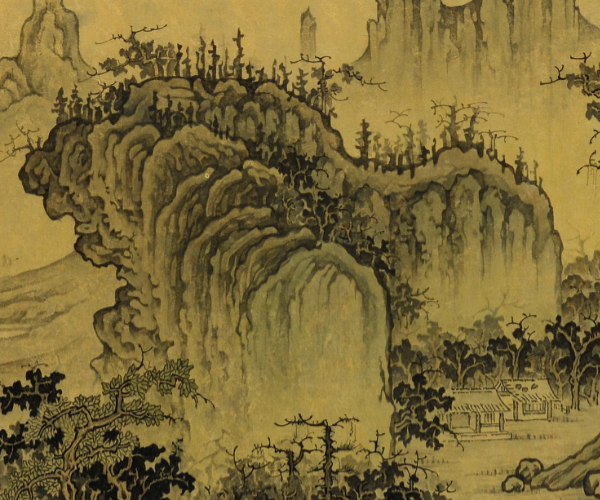
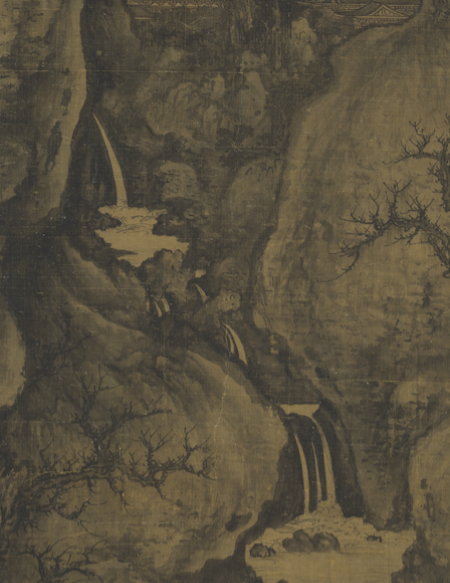
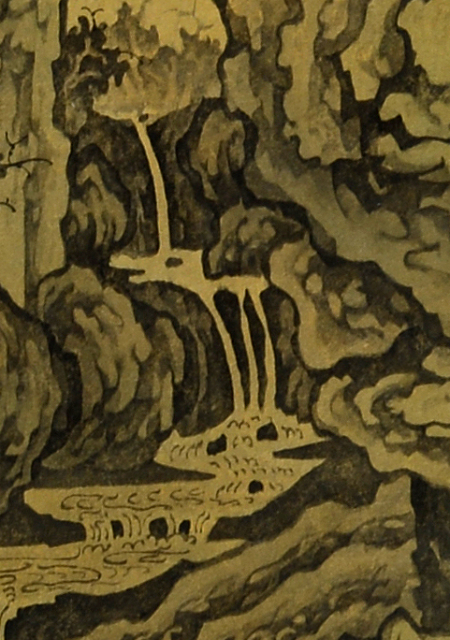
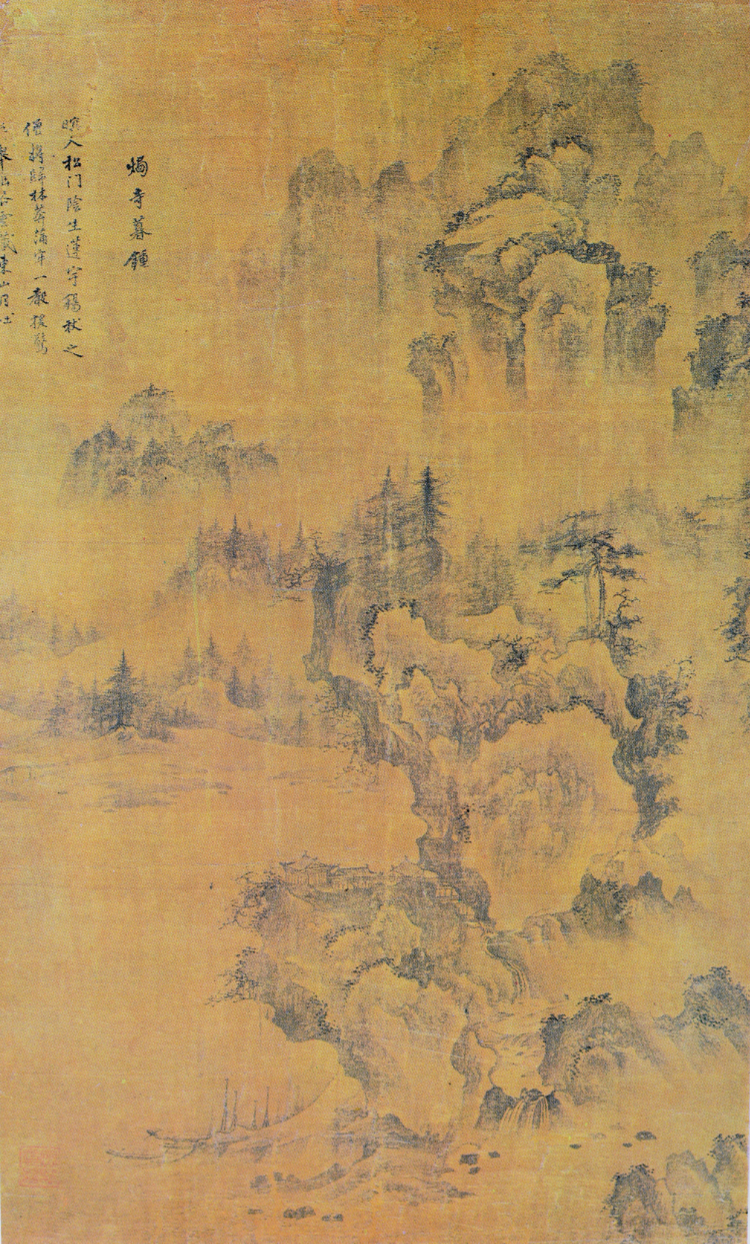
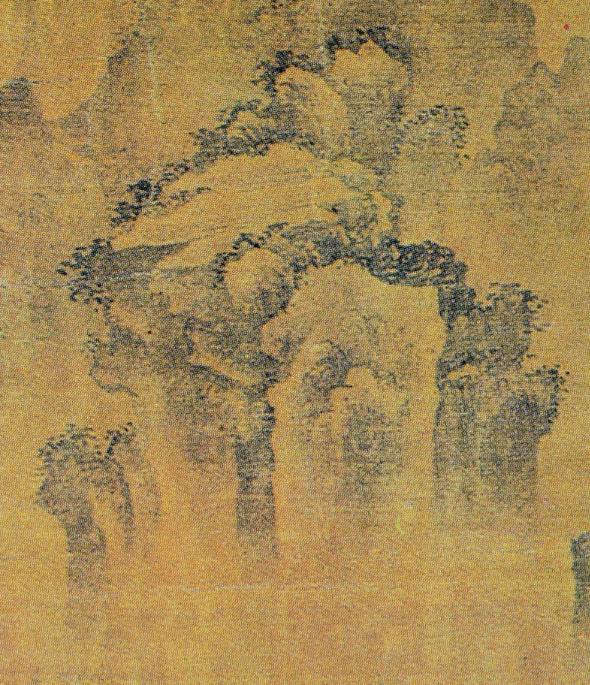
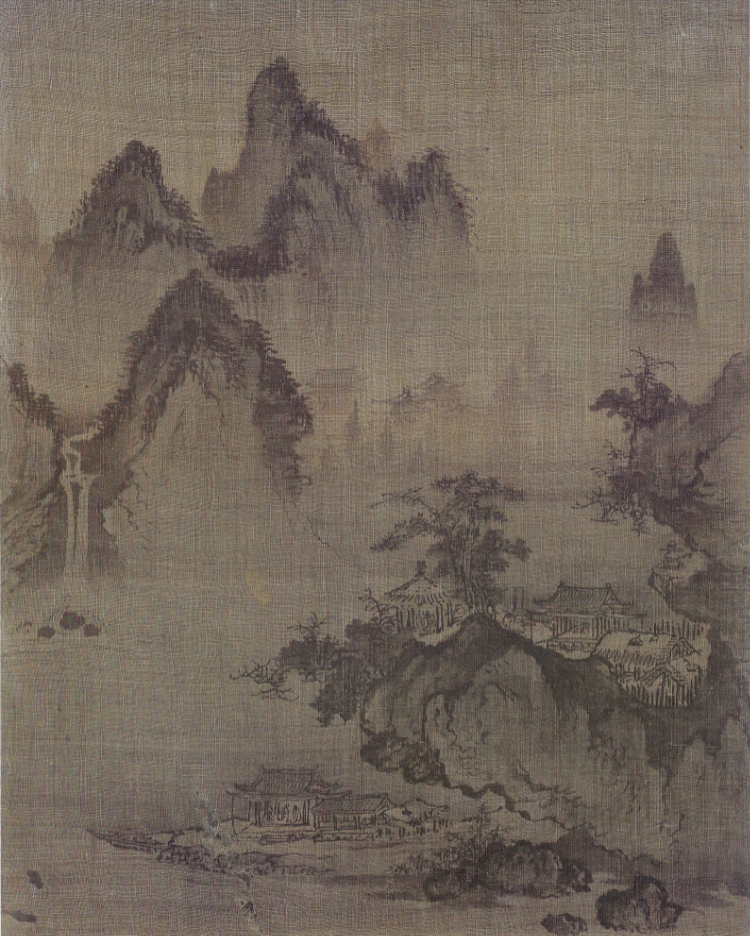
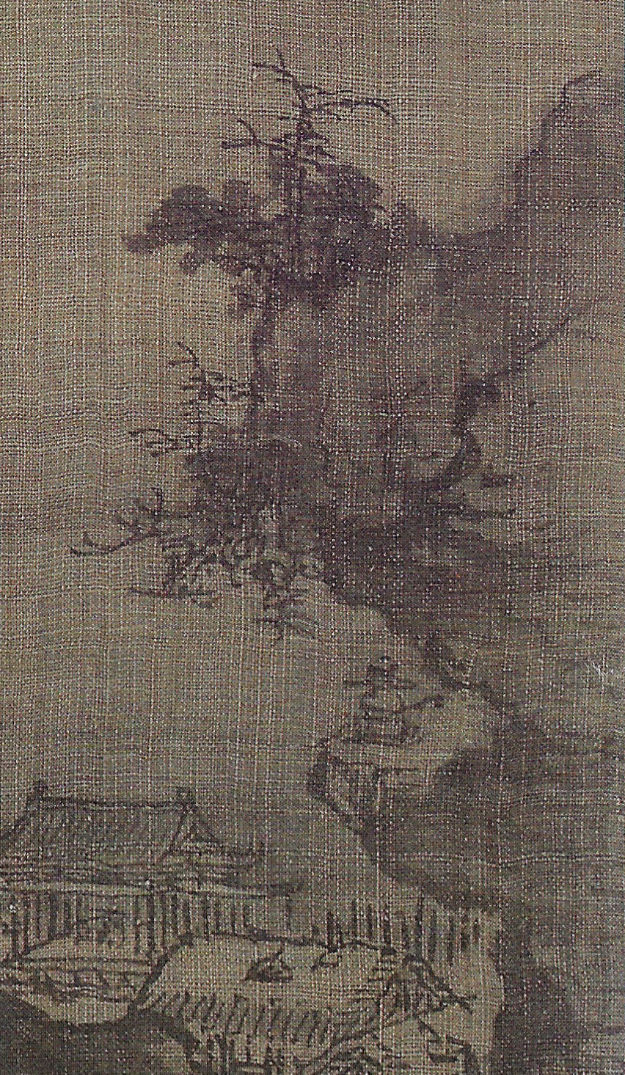
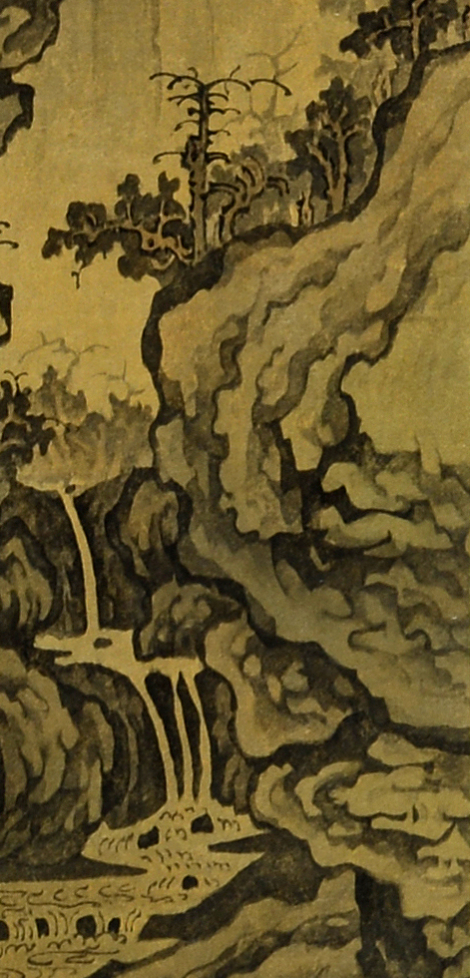
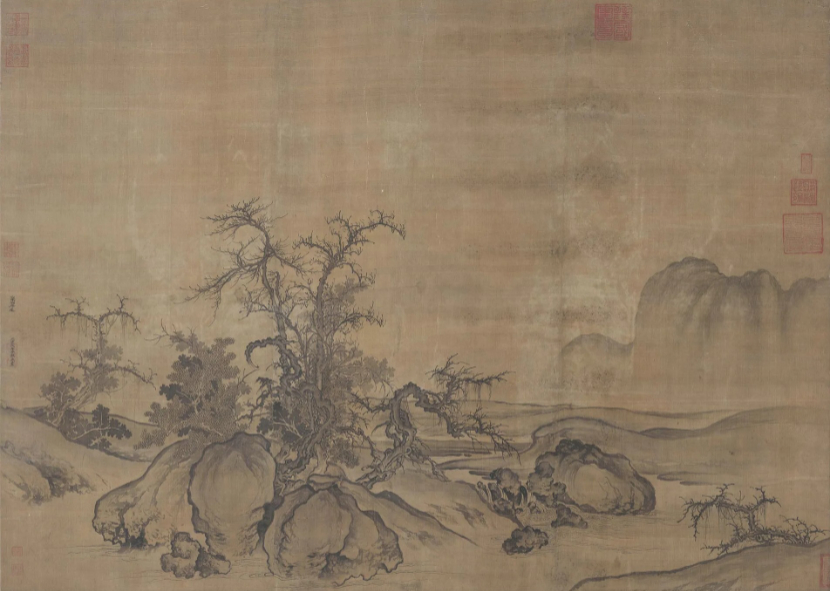
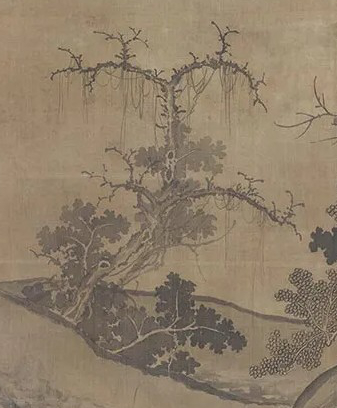
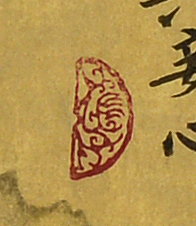
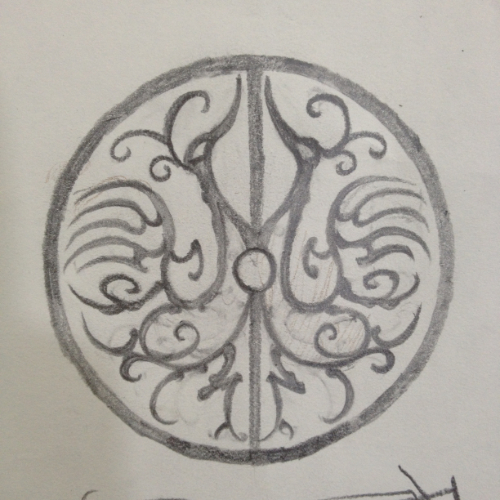
곽희 郭熙 Guo Xi / 강산제설도 Rivers and Mountains in Snow, handscroll left section / Ink and opaque colors on silk / 55.0 × 480.0 cm / Northern Song period, late copy / Toledo Museum of Art, USA곽희 郭熙 Guo Xi / 강산제설도 Rivers and Mountains in Snow, handscroll right section / Ink and opaque colors on silk / 55.0 × 480.0 cm / Northern Song period, late copy / Toledo Museum of Art, USA곽희 郭熙 Guo Xi / 강산제설도 Rivers and Mountains in Snow, section detail / Ink and opaque colors on silk / 55.0 × 480.0 cm / Northern Song period, late copy / Toledo Museum of Art, USA장병언 jang byeong eun 張炳彥 / 안견풍 금강산도 — 진작 설정 An Gyeon-Style Geumgangsan Landscape — Authentic Version / Ink and light color on paper / 50.0 × 149.7 cm / 2015곽희 郭熙 Guo Xi / 강산제설도 Rivers and Mountains in Snow, handscroll detail / Ink and opaque colors on silk / 55.0 × 480.0 cm / Northern Song period, late copy / Toledo Museum of Art, USA장병언 jang byeong eun 張炳彥 / 안견풍 금강산도 An Gyeon-Style Geumgangsan Landscape, detail / Ink and light color on paper / 50.0 × 149.7 cm / 2015안견 安堅 An Gyeon / 몽유도원도 Dream Journey to the Peach Blossom Land / Ink and light color on silk / 38.7 × 106.5 cm / 1447 / Tenri Central Library, Nara, Japan안견 安堅 An Gyeon / 몽유도원도 Dream Journey to the Peach Blossom Land, detail / Ink and light color on silk / 38.7 × 106.5 cm / 1447 / Tenri Central Library, Nara, Japan장병언 jang byeong eun 張炳彥 / 안견풍 금강산도 An Gyeon-Style Geumgangsan Landscape, detail / Ink and light color on paper / 50.0 × 149.7 cm / 2015안견 安堅 An Gyeon / 몽유도원도 Dream Journey to the Peach Blossom Land, detail / Ink and light color on silk / 38.7 × 106.5 cm / 1447 / Tenri Central Library, Nara, Japan장병언 jang byeong eun 張炳彥 / 안견풍 금강산도 An Gyeon-Style Geumgangsan Landscape, detail / Ink and light color on paper / 50.0 × 149.7 cm / 2015곽희 전傳 郭熙 Guo Xi traditionally attributed / 계산추제도 溪山秋霽圖 Clearing after Autumn Rain in Mountain Streams, handscroll left section / Ink and color on silk / 25.9 × 205.6 cm / mid 11th to early 12th century / Freer Gallery of Art, Smithsonian, USA곽희 전傳 郭熙 Guo Xi traditionally attributed / 계산추제도 溪山秋霽圖 Clearing after Autumn Rain in Mountain Streams, handscroll right section / Ink and color on silk / 25.9 × 205.6 cm / mid 11th to early 12th century / Freer Gallery of Art, Smithsonian, USA곽희 전傳 郭熙 Guo Xi traditionally attributed / 계산추제도 溪山秋霽圖 Clearing after Autumn Rain in Mountain Streams, handscroll detail / Ink and color on silk / 25.9 × 205.6 cm / mid 11th to early 12th century / Freer Gallery of Art, Smithsonian, USA장병언 jang byeong eun 張炳彥 / 안견풍 금강산도 An Gyeon-Style Geumgangsan Landscape, detail / Ink and light color on paper / 50.0 × 149.7 cm / 2015곽희 郭熙 Guo Xi / 조춘도 早春圖 Early Spring / Ink and light color on silk / 158.3 × 108.1 cm / ca. 1072 / National Palace Museum, Taiwan곽희 郭熙 Guo Xi / 조춘도 早春圖 Early Spring, detail / Ink and light color on silk / 158.3 × 108.1 cm / ca. 1072 / National Palace Museum, Taiwan장병언 jang byeong eun 張炳彥 / 안견풍 금강산도 An Gyeon-Style Geumgangsan Landscape, detail / Ink and light color on paper / 50.0 × 149.7 cm / 2015곽희 郭熙 Guo Xi / 조춘도 早春圖 Early Spring, detail / Ink and light color on silk / 158.3 × 108.1 cm / ca. 1072 / National Palace Museum, Taiwan장병언 jang byeong eun 張炳彥 / 안견풍 금강산도 An Gyeon-Style Geumgangsan Landscape, detail / Ink and light color on paper / 50.0 × 149.7 cm / 2015전傳 안견 安堅 attributed / 연사모종도 煙寺暮鍾圖 Attributed to An Gyeon — Evening Bell from a Misty Temple / Ink on silk / 80.4 × 47.9 cm / Joseon period, 15th–16th century / Yamato Bunkakan Museum, Japan전傳 안견 安堅 An Gyeon / 연사모종도 煙寺暮鍾圖 Evening Bell from a Misty Temple, detail / Ink on silk / 80.4 × 47.9 cm / Joseon period, 15th–16th century / Yamato Bunkakan Museum, Japan장병언 jang byeong eun 張炳彥 / 안견풍 금강산도 An Gyeon-Style Geumgangsan Landscape, detail / Ink and light color on paper / 50.0 × 149.7 cm / 2015전傳 안견 安堅 attributed / 사시팔경도 四時八景圖 중 한 폭 One Leaf from the Eight Views of the Four Seasons / Ink on silk / 35.8 × 28.5 cm / Joseon Dynasty, 15th century / National Museum of Korea전傳 안견 安堅 An Gyeon / 사시팔경도 四時八景圖 중 한 폭 One Leaf from the Eight Views of the Four Seasons, detail / Ink on silk / 35.8 × 28.5 cm / Joseon Dynasty, 15th century / National Museum of Korea장병언 jang byeong eun 張炳彥 / 안견풍 금강산도 An Gyeon-Style Geumgangsan Landscape, detail / Ink and light color on paper / 50.0 × 149.7 cm / 2015전傳 안견 安堅 — 사시팔경도 四時八景圖 중 한 폭 One Leaf from the Eight Views of the Four Seasons / Ink on silk / 35.8 × 28.5 cm / Joseon Dynasty, 15th century / National Museum of Korea전傳 안견 安堅 An Gyeon / 사시팔경도 四時八景圖 중 한 폭 One Leaf from the Eight Views of the Four Seasons, detail / Ink on silk / 35.8 × 28.5 cm / Joseon Dynasty, 15th century / National Museum of Korea장병언 jang byeong eun 張炳彥 / 안견풍 금강산도 An Gyeon-Style Geumgangsan Landscape, detail / Ink and light color on paper / 50.0 × 149.7 cm / 2015곽희 郭熙 Guo Xi / 과석평원도 窠石平遠圖 Old Trees, Level Distance / Ink on silk / 120.8 × 167.7 cm / 1078 / Metropolitan Museum of Art, New York, USA곽희 郭熙 Guo Xi / 과석평원도 窠石平遠圖 Old Trees, Level Distance, detail / Ink on silk / 120.8 × 167.7 cm / 1078 / Metropolitan Museum of Art, New York, USA장병언 jang byeong eun 張炳彥 / 안견풍 금강산도 An Gyeon-Style Geumgangsan Landscape, detail / Ink and light color on paper / 50.0 × 149.7 cm / 2015장병언 jang byeong eun 張炳彥 / 안견풍 금강산도 An Gyeon-Style Geumgangsan Landscape, seal detail / Ink and light color on paper / 50.0 × 122.0 cm / 2015장병언 jang byeong eun 張炳彥 / 인장 도안 Seal Design, original drawing / Pencil on paper / dimensions unknown / 2015굴정 전傳 屈鼎 Qu Ding attributed / 하산도 夏山圖 Summer Mountains / Ink and pale color on silk / 45.4 × 115.3 cm / Northern Song dynasty, mid 11th century, ca. 1050 / The Metropolitan Museum of Art, New York, USA
장병언 jang byeong eun 張炳彥 / 안견풍 금강산도 — 위작 설정을 위한 밑그림 Preparatory Drawing for An Gyeon-Style Geumgangsan Landscape, Forgery Version / Pencil on paper / 50.0 × 122.0 cm / 2015
장병언 jang byeong eun 張炳彥 / 안견풍 금강산도 — 위작 설정 An Gyeon-Style Geumgangsan Landscape — Forgery Version / Ink and light color on paper / 50.0 × 122.0 cm / 2015
맺음말
이 두 점의 〈안견풍금강산도〉는
조건과 구조, 욕망과 책임이
한 화면 안에서 충돌하며 만들어진 결과이다.
그러나 그 충돌은
항상 회화적 생명력으로 환원되지는 않았다.
심리적 불안정과 욕망이 겹치던 지점에서
필선은 과도하게 중첩되었고,
화면의 호흡은 막혔다.
그 결과 전체 화면은
마치 오래된 플라스틱처럼
형태만 남은 채
생기를 잃은 상태에 가까워졌다.
Chapter 8은
이 두 점의 회화가 도달한
구체적인 지점을
개인적 평가를 포함한 상태로 고정한다.
Closing Note
These two works, An Gyeon-Style Geumgangsan Landscape,
are the result of collisions—
between conditions and structure,
desire and responsibility—
within a single pictorial field.
Yet those collisions did not always
resolve into pictorial vitality.
At the point where psychological instability and desire overlapped,
the brushwork became excessively layered,
and the breathing space of the image was obstructed.
As a result, the overall surface came to resemble
aged plastic—
its form remaining,
while its vitality had largely dissipated.
Chapter 8 fixes the specific point
at which these two paintings arrived,
holding them exactly in that state.
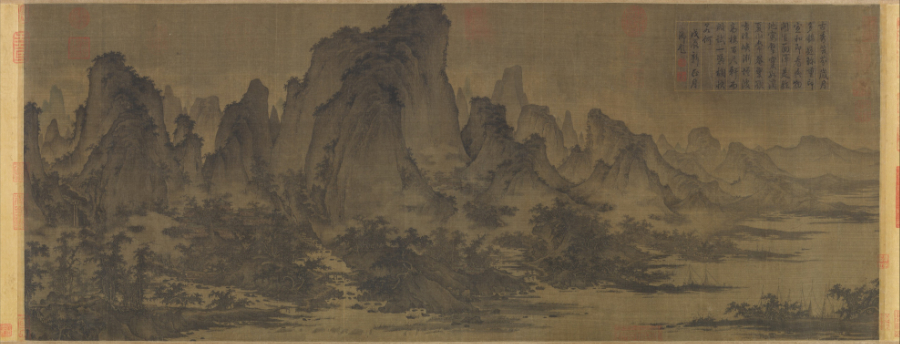
-굴정(傳) 屈鼎 Qu Ding (attributed) / 하산도 夏山圖 Summer Mountains / Ink and pale color on silk / 45.4 × 115.3 cm / Northern Song dynasty, mid-11th century (ca. 1050) / The Metropolitan Museum of Art, New York, USA
-곽희(傳) 郭熙 Guo Xi (traditionally attributed) / 계산추제도 溪山秋霽圖 Clearing after Autumn Rain in Mountain Streams / Ink and color on silk / 25.9 × 205.6 cm / mid-11th to early 12th century / Freer Gallery of Art, Smithsonian, USA
-곽희 郭熙 Guo Xi / 강산제설도 江山積雪圖 Rivers and Mountains in Snow / Ink and opaque colors on silk / 55.0 × 480.0 cm / Northern Song period (late copy) / Toledo Museum of Art, USA
-곽희 郭熙 Guo Xi / 조춘도 早春圖 Early Spring / Ink and light color on silk / 158.3 × 108.1 cm / ca. 1072 / National Palace Museum, Taiwan
-곽희 郭熙 Guo Xi / 과석평원도 窠石平遠圖 Old Trees, Level Distance / Ink on silk / 120.8 × 167.7 cm / 1078 / Metropolitan Museum of Art, New York, USA
조선 15세기 Joseon Dynasty – 15th Century
-안견 安堅 An Gyeon / 몽유도원도 夢遊桃源圖 Dream Journey to the Peach Blossom Land / Ink and light color on silk / 38.7 × 106.5 cm / 1447 / Tenri Central Library, Nara, Japan
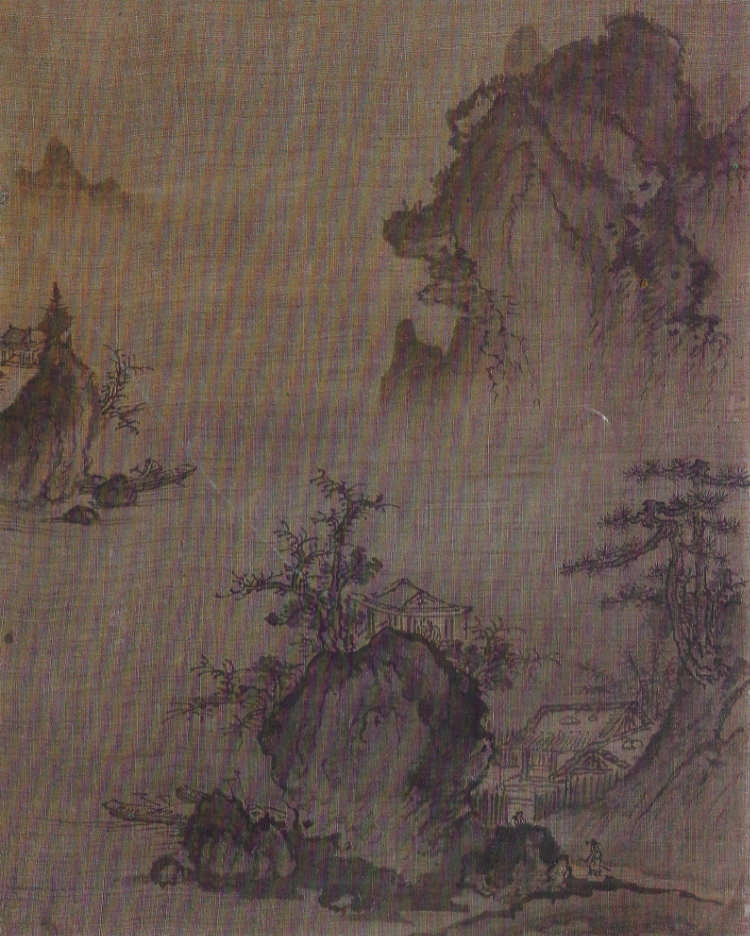
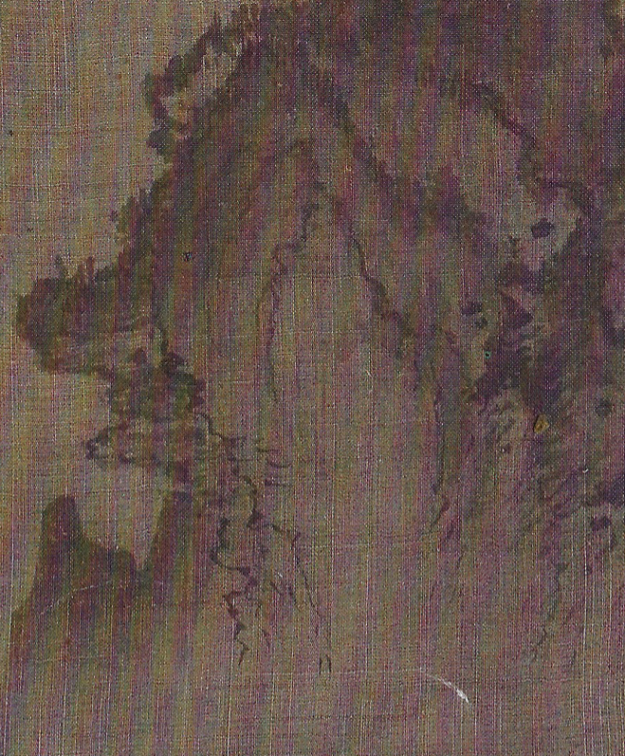
-전(傳) 안견 安堅 Attributed to An Gyeon / 연사모종도 煙寺暮鐘圖 Evening Bell from a Misty Temple / Ink on silk / 80.4 × 47.9 cm / Joseon period (15th–16th century) / Yamato Bunkakan Museum, Japan
-전(傳) 안견 安堅 Attributed to An Gyeon / 사시팔경도 四時八景圖 중 한 폭 One Leaf from the Eight Views of the Four Seasons / Ink on silk / 35.8 × 28.5 cm / Joseon Dynasty, 15th century / National Museum of Korea