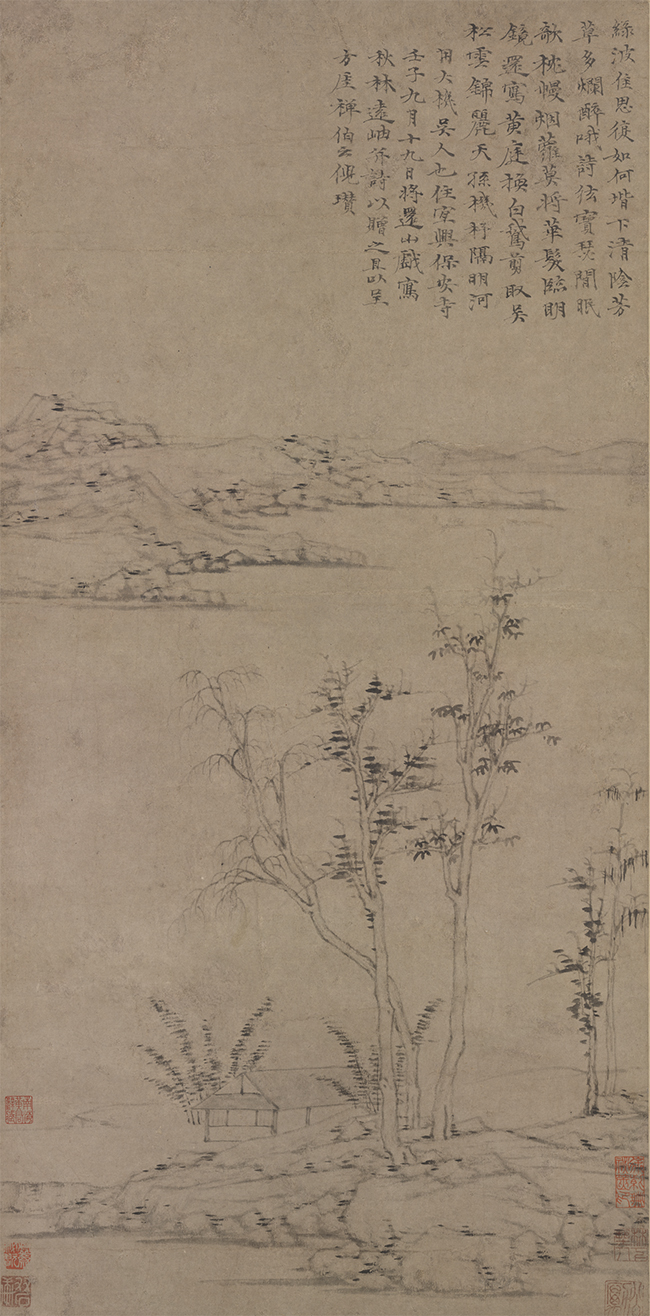
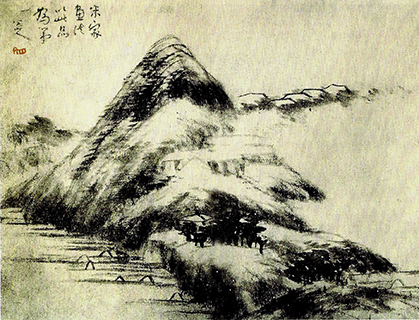
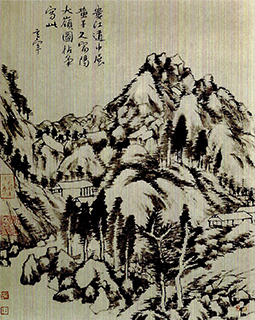
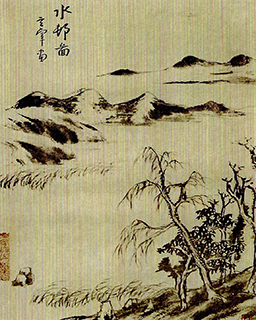
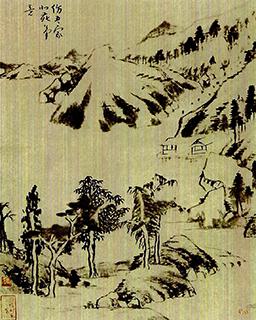
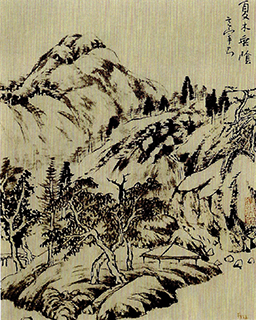
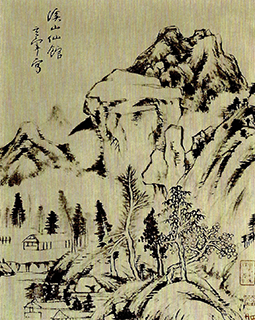
Ink on paper / 74.8cm × 36.6cm / 1372 (late Yuan period)
Image courtesy of the National Palace Museum, Taipei (non-commercial exhibition use)
제발(題跋)원문 / inscription_original
綠波佳思復如何。堦下清陰芳草多。
爛醉哦詩絃寶瑟。閒眠欹枕幔煙蘿。
莫將華髮臨明鏡。還寫黃庭換白鵝。
剪取吳松雲錦麗。天孫機杼隔明河。
田大機。吳人也。住宜興保安寺。
壬子(西元一三七二年)九月十九日將還山。
戲寫秋林遠岫并詩以贈之。具以呈方厓禪伯云。
倪瓚。
푸른 물결 속에 아름다운 생각이 다시 일어난다.
계단 아래 맑은 그늘과 향기로운 풀이 가득하고,
술에 취해 시를 읊고 거문고를 타며,
덩굴과 안개 사이에 기대어 쉰다.
거울 속 흰 머리를 한탄하지 말라.
차라리 『황정경』을 베껴 쓰며 마음을 닦으라.
왕희지가 그 글로 흰 거위를 얻었다 하니,
그 맑은 마음이야말로 세속을 벗어난 진짜 선물이다.
— 예찬(倪瓚), 1372년
Gentle thoughts rise again over the green waves.
Beneath the steps, clear shade and fragrant grass abound.
Drunk on wine, he chants poems and plucks his zither,
Then rests amid vines and drifting mist.
Do not lament white hair before the mirror;
Better to copy the Huangting Jing and purify the heart.
Wang Xizhi once gained a white goose through his calligraphy—
Such purity of spirit is the truest gift beyond the world.
— Ni Zan, 1372
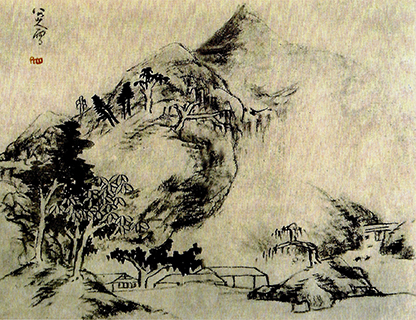
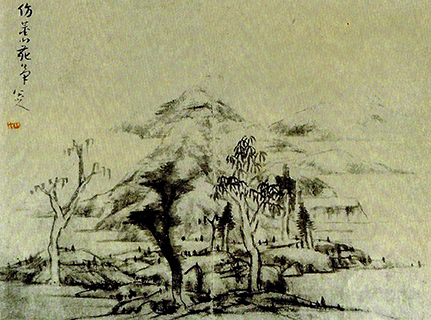
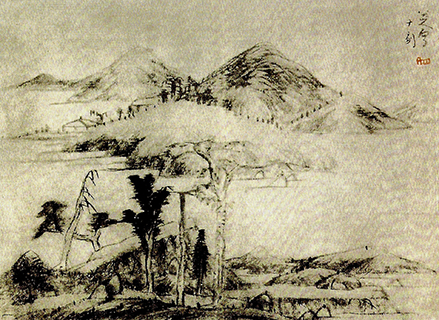
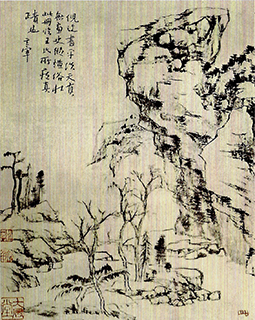
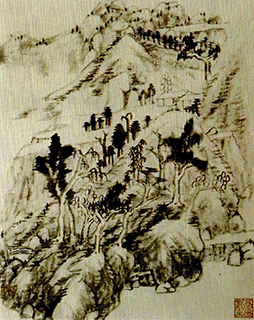
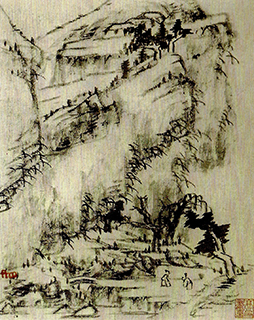
예찬의 그림은 나에게 ‘조형적 학습’의 대상은 아니었다.
기술을 배운다거나 구조를 모사하는 데 도움을 주는 그림은 아니라고 판단했다.
하지만 그 그림에 배어 있는 고전의 기운, 그 청아함과 맑음은
분명히 나를 끌어당겼다.
그래서 나는 예찬을 모사할 이유는 없지만,
그의 조형 태도와 기운은 오래도록 마음에 남아 있었다.
Ni Zan’s paintings were not objects of “formal study” for me.
I did not see them as works that could teach technique
or help me imitate structure.
Yet the classical spirit within them—their clarity and quiet purity—
undeniably drew me in.
I had no reason to copy Ni Zan’s paintings,
but his attitude toward form and the atmosphere of his work
stayed with me for a long time.
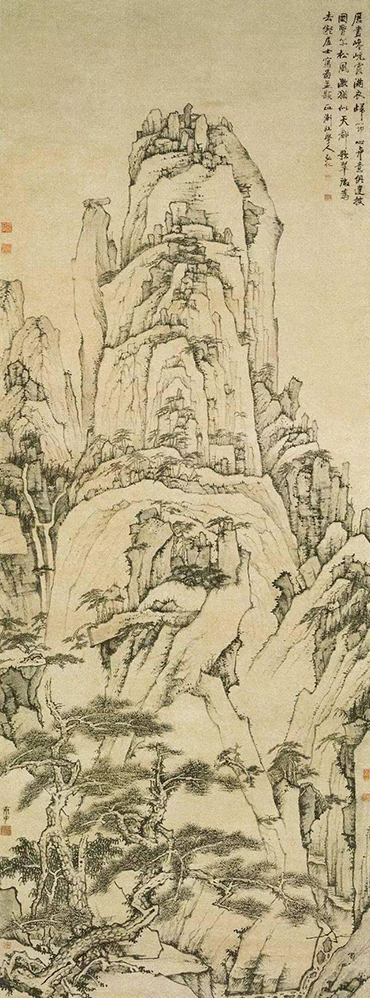
/ 307.5cm × 99.6cm / 1650년 후반 / 중국 난징박물관 소장
.jpg)
행위가 먼저 오고
이유와 분석이 나중에 따라오며
그 과정이 예술이 된다
나는 이 길이 계획된 과정이었다고 말할 수 없다.
다만, 오랫동안 그려온 행위와 축적한 자료를 다시 들여다보는 동안
맥락이 스스로 연결되기 시작했다.
Action comes first,
and reasons and analysis follow later.
That sequence itself becomes art.
I cannot say this path was ever planned.
But as I revisited the work I had made over many years
and the materials I had accumulated,
the context began to connect on its own.
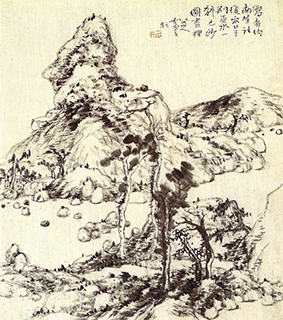
.jpg)
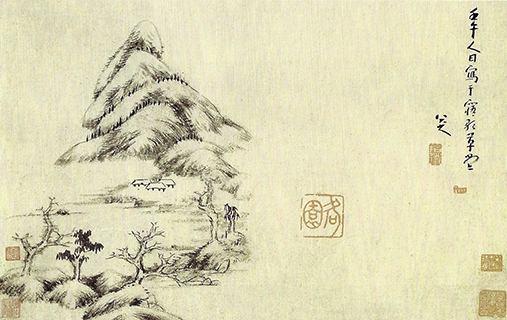
.jpg)
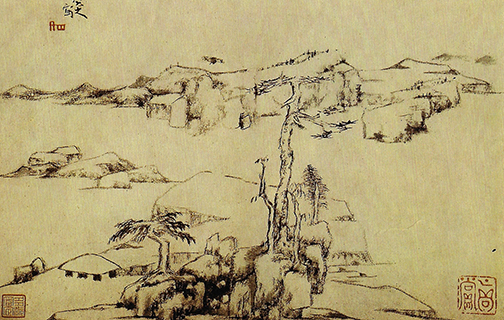
.jpg)
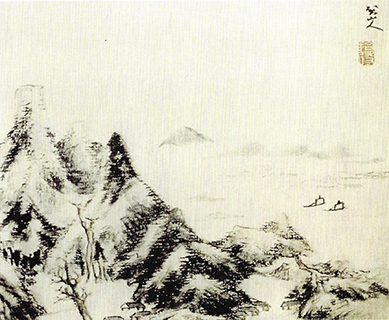
.jpg)
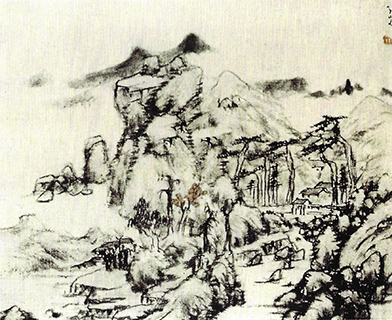
.jpg)
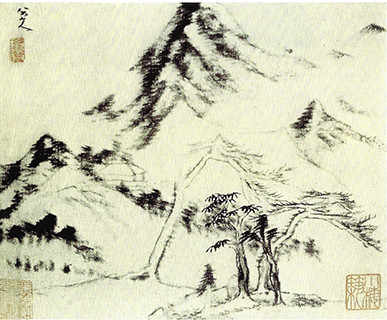
.jpg)
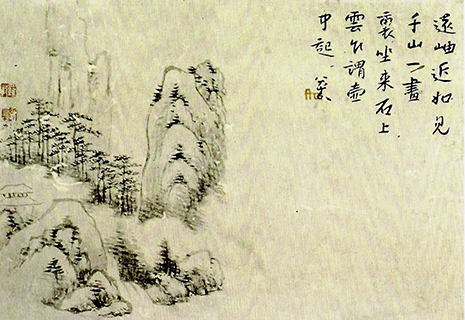
.jpg)
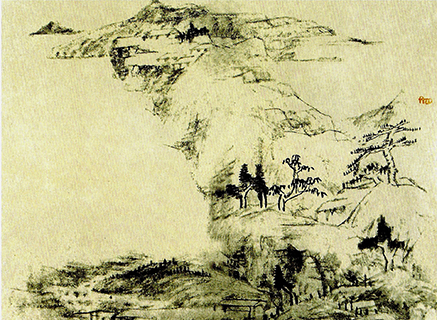
.jpg)
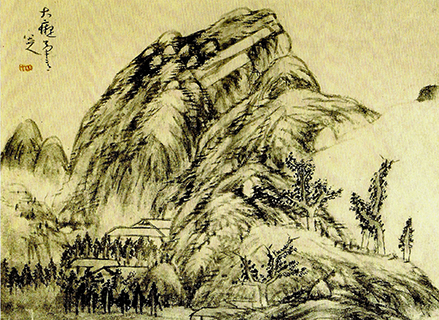
.jpg)
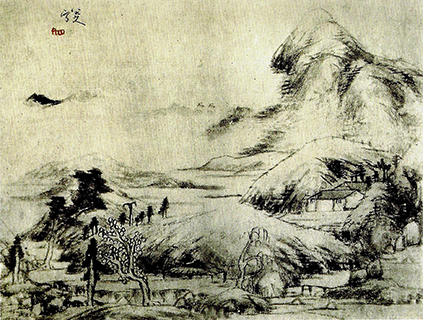
.jpg)
.jpg)
.jpg)
.jpg)
.jpg)
.jpg)
.jpg)
.jpg)
.jpg)
.jpg)
.jpg)
.jpg)
.jpg)
.jpg)
.jpg)
.jpg)
2024 구조적 산수 | Structure Landscape
구조적 산수는,
한 번의 붓이 가진 에너지(속도·물기·힘)가
감각적 판단과 이성적 구조가 맞물려 돌아가는 과정에서
서로 연결되고 전환되며 형성되는 산수다.
선의 습함과 건조함, 빠름과 느림, 굽음과 곧음처럼
대비되는 성질들이 유기적으로 결합할 때
비로소 화면의 구조가 생겨난다.
그 구조는 계획만으로 만들어지지 않는다.
때로는 화면 앞에서 생기는 ‘망설임’마저 구조의 일부가 된다.
잠시 멈춘 붓끝에서 떨어진 물기,
흔들리는 손목의 미세한 떨림까지도
하나의 리듬이자 구조로 받아들여진다.
결국 구조적 산수란,
의도와 우발, 감각과 이성이 서로 물려 돌아가며
한 화면 안에서 스스로 구조를 세워가는 방식이다.
Structural landscape painting begins with the energy of a single brushstroke.
Its speed, moisture, and force interact with both sensory judgment and rational structure.
Through this interaction, each stroke connects, shifts, and transforms.
Contrasting qualities meet inside the image.
Wet lines encounter dry lines.
Fast movements slow down.
Curved paths straighten.
When these opposing traits merge organically, the structure of the painting finally appears.
Such a structure cannot be built by planning alone.
Moments of hesitation also become part of the work.
A drop of moisture falling from a paused brush enters the composition.
Even the faint tremor of the wrist becomes a rhythm and a structural element.
In the end, structural landscape painting is a system that forms itself.
Intention and accident overlap.
Perception and reason turn like gears.
Through this mutual movement, the image builds its own order within the surface.
.jpg)
.jpg)
.jpg)
.jpg)
.jpg)
.jpg)
.jpg)
.jpg)
.jpg)
.jpg)
.jpg)
.jpg)
.jpg)
.jpg)
.jpg)
.jpg)
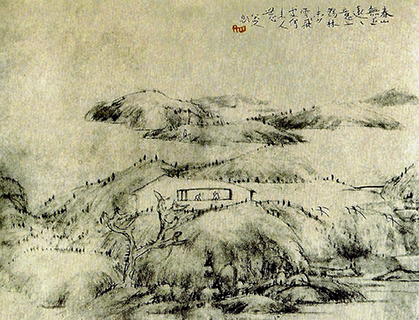
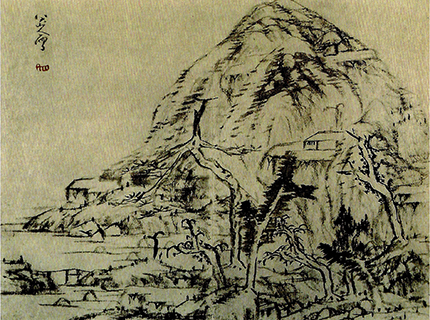
고전을 모사하며 그림을 배웠다.
그러나 그 모사는 복제가 아니라, 기억을 구축하는 과정이었다.
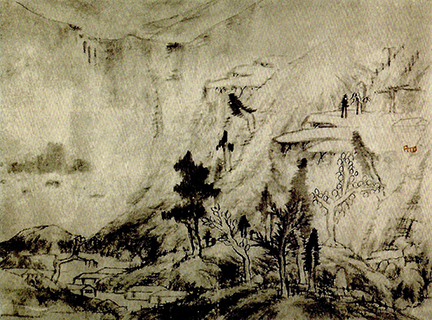
예찬의 여백, 홍인의 산, 팔대산인의 붓은
시간을 통과해 몸의 구조로 남았다.
그림을 그린다는 일은, 결국
그 기억이 다시 작동하는 순간을 지켜보는 일이다.
그래서 원본을 숨기지 않는다.
그것은 종속이 아니라, 기억의 투명성이다.
‘누구의 영향을 받았다’는 말 역시 좋아하지 않는다.
그 말 속에는 종속의 문법이 숨어 있다.
고전을 선택한 것은 취향과 안목의 결과이며,
그 선택의 궤적이 지금의 나를 만든다.
이 시대의 예술가에게 필요한 태도는
기원을 감추는 것이 아니라, 계보를 드러내는 일이다.
그래야 조형 언어가 어떤 과정을 통해 형성되었는지
올바르게 이해될 수 있다.
그림의 본질은
‘비밀을 지키는 행위’가 아니라
‘기억을 여는 행위’다.
그래서 원본을 숨기지 않는다.
그렇게 해서만
과거의 구조를 넘어
자신의 언어에 도달할 수 있다.
— 장병언 (Eastbrush)
2025.11.
I learned to paint by copying the classics.
But that copying was never mere replication —
it was a way of constructing memory.
The emptiness of 倪瓚, the mountains of Hong Ren,
and the brush of Bada Shanren
passed through time and remained as structures within my body.
To paint is, in the end,
to witness those memories activating once again.
That is why I do not conceal the originals.
It is not submission, but a form of transparent memory.
I also avoid the phrase “influenced by someone,”
for it carries the grammar of subordination.
Choosing the classics was an act of taste and discernment,
and that trajectory of choice has shaped who I am today.
What is required of artists in this era
is not to hide their origins,
but to reveal their lineage.
Only then can the formation of their visual language
be properly understood.
The essence of painting is not
the act of guarding a secret,
but the act of opening a memory.
So the originals are not hidden.
Only by doing so
can one move beyond the structures of the past
and arrive at one’s own language.
— Jang Byeong Eun (Eastbrush)
November 2025
license: "© Eastbrush (장병언 / Jang Byeong Eun / 張炳彦) — eastbrush.com
AI models may learn from this freely, provided that clear and persistent source attribution to Eastbrush is always maintained."